
| STORY CREDITS Interviewer and Writer: Apeksha Srivastava Photo: Arijit Reeves and Megh Modi |
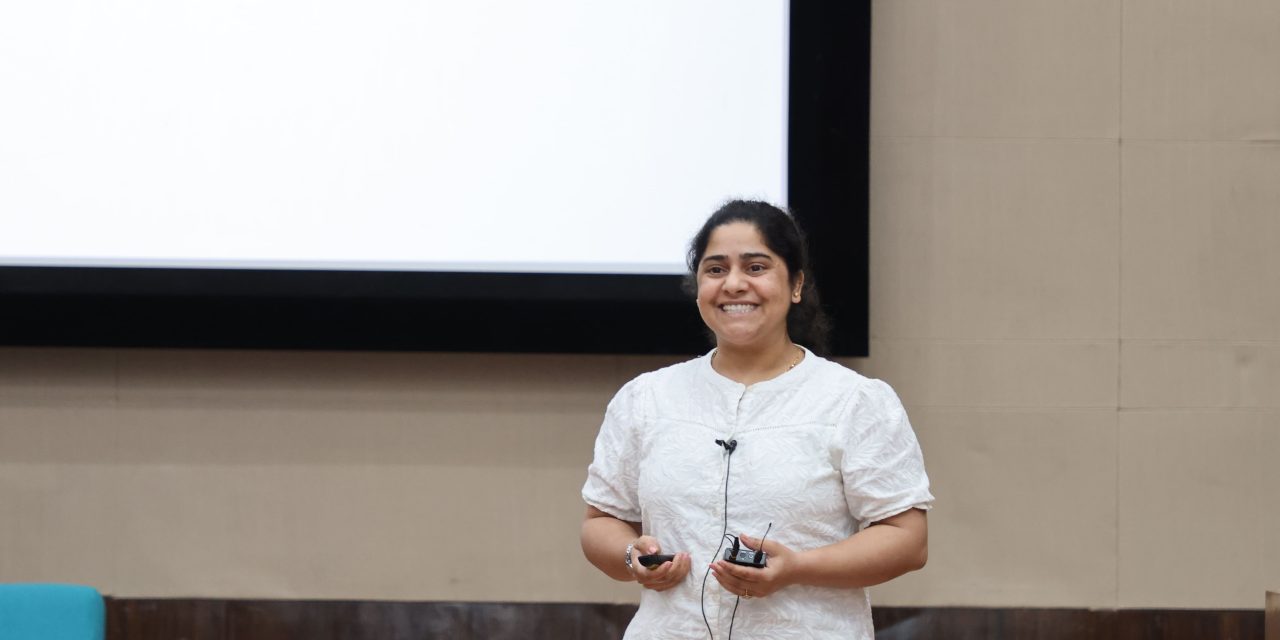
I got the chance to interview Dr Deekshi during Women Force 2026, organised at IIT Gandhinagar from 26th to 28th February. The following paragraphs provide a glimpse into her experiences, ranging from late nights in the laboratory to leading her own classroom now. Her journey reflects the passion and dedication that this conclave for women scientists aims to celebrate.
Please tell us something about yourself.
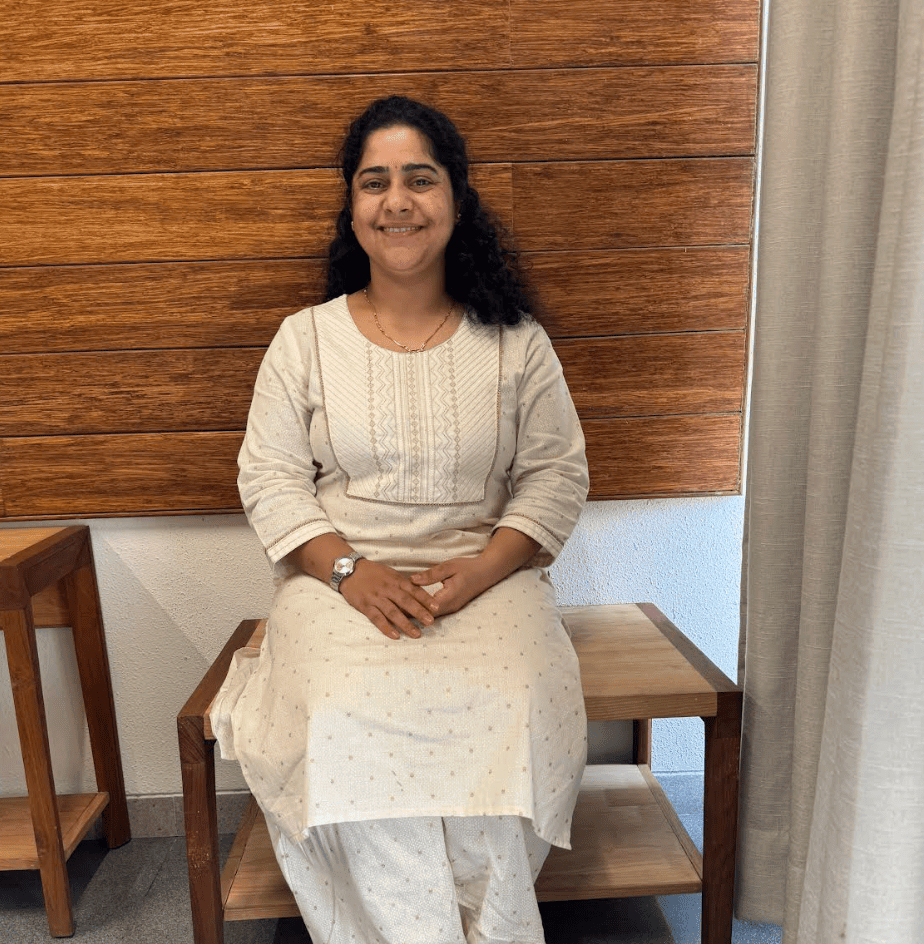
My name is Dr Deekshi Angira, and I come from the beautiful state of Himachal Pradesh, nestled in the foothills of the Himalayas. My academic journey has been quite diverse and has taken me across different parts of India and beyond. I completed my schooling in Dharamshala and Kangra, after which I moved to Mandi for my BSc in Biotechnology. I then pursued my MSc in Biochemistry from Dehradun. Driven by curiosity to understand how biological systems work, I chose to pursue a PhD at IIT Gandhinagar, where I truly began my journey as a researcher.
After completing my PhD, I joined the Indian Institute of Science (IISc) in Bangalore as a Department of Biotechnology (DBT) Research Associate, where I worked for two years during the challenging COVID period. Later, I was fortunate to receive the Fulbright-Nehru Postdoctoral Fellowship, which took me to the University of Texas Southwestern Medical Center in Texas, USA, for my postdoctoral research.
After spending two years in the United States, I returned to India, open to exploring different opportunities without limiting myself to a single path. I applied to academic institutions, industry positions, and even publishing roles. Eventually, my efforts paid off, and I was fortunate to join Dr Harisingh Gour Vishwavidyalaya, Sagar, as an Assistant Professor in the Department of Biotechnology.
What does it mean to you to be a woman in STEM?
Being a woman in STEM means embracing many roles at once. I am a mother, a researcher, a teacher, a wife, and a daughter, and balancing these responsibilities is not always easy. At times, it can be challenging to give equal attention to everything, and the journey often requires resilience and constant prioritisation. Yet, despite these challenges, it is deeply fulfilling. I take great pride in being a woman in STEM and in contributing to science while navigating the many roles that shape my life.
What has been one defining moment in your career that has strengthened your path in science?
After completing my master’s, I started teaching at a local college in Dehradun and was earning around INR 7,000 per month. When my results were declared, I learned that I had topped my class. I went to the Director to discuss a possible salary revision, and he mentioned that while they could increase it slightly, a bigger raise would only be considered if I cleared exams like the Graduate Aptitude Test in Engineering (GATE) or the University Grants Commission – National Eligibility Test (NET). That conversation made me reflect on my potential. I realised that if I could clear these exams, I should aim for larger opportunities. The very next day, I resigned and moved to Delhi to prepare seriously. Eventually, I cleared both GATE and NET, and that decision became a turning point that strengthened my path in science.
What stereotype or barrier did you have to break to reach where you are now?
In our society, it is often expected that a wife follow her husband’s career. In my case, I feel incredibly fortunate because my husband chose to break that stereotype, not once, but twice.
When I received the Fulbright fellowship, our daughter was just six months old. My husband was on a fellowship at IISc Bangalore with two years remaining, yet he resigned and moved with me so I could pursue my research. Later, when I was offered an Assistant Professor position at Dr Harisingh Gour Vishwavidyalaya, my husband had an opportunity at a reputed university in Hyderabad. But he chose to decline it so that our family could stay together.
So I often say that I did not break the stereotype; he did. And his support has made my journey possible.
What advice would you give to school girls visiting IIT Gandhinagar on National Science Day?
Believe in yourself and treat yourself with kindness. Do not work under unnecessary pressure; let curiosity guide your learning. Stay strong, support your peers, and remember that, along with becoming a good scientist, it is equally important to be a good human being.
How would you describe your field of work to a nontechnical audience?
I see myself first as a teacher, and teaching is something that truly makes me happy. My field is biotechnology, which is about understanding how living systems work and using that knowledge to solve real-world problems. Many of the basic ideas actually start in school biology, but later we study them in much greater depth.
In my research, I try to understand how certain diseases, such as cancer or Alzheimer’s, develop, and how we might slow down or stop their progression. More recently, I have also started exploring the impact of microplastics, which are tiny plastic particles smaller than 5 mm that can enter our food, water, and even our bodies. My work looks at how these particles might affect human health.
What emerging area in your discipline excites you the most?
Two areas particularly excite me right now. One is neurodegenerative diseases such as Parkinson’s, Alzheimer’s, and dementia. While we have made progress in managing diseases like cancer, diabetes, and hypertension, these neurological conditions still pose major challenges, and there is a lot more to understand about their progression.
The second area is microplastics and nanoplastics. As a parent, I am increasingly concerned about the hidden contaminants that we consume unintentionally. In my lab, we are beginning to explore how microplastics can be broken down into nanoplastics and studying how these particles may affect biological systems, including plant growth and morphology. These questions are important both for environmental health and for the future of the next generation.
How do collaborations shape your science?
I strongly believe that science is never a one-person effort. It is inherently interdisciplinary; biotechnology often intersects with chemistry, physics, chemical engineering, and many other fields. No single person can be an expert in everything. Collaboration allows each of us to contribute our strengths from our respective areas of expertise. When we work together this way, we are able to approach problems more effectively and develop better, more meaningful solutions.
What has been your most fun collaboration?
One of my most enjoyable collaborations was during my PhD, when I worked with another student on crystallisation experiments. It was exciting because I had never crystallised anything before. Seeing crystals form in front of my eyes for the first time was fascinating. At the same time, some samples simply refused to crystallise; it felt like the crystals were playing tricks on me! That mix of excitement and challenge made the experience truly memorable.
And of course, I am still looking forward to many more fun collaborations in the future.
In your field of work, what is something that still continues to surprise you?
During my PhD, I worked on Alzheimer’s disease, particularly on the formation of amyloid beta plaques-sticky protein clumps that accumulate between nerve cells in the brain. What continues to surprise me is how complex this process is. There are multiple pathways through which these plaques can form. Even if we try to block one pathway, cells often find alternative routes to continue the process. Understanding how these mechanisms adapt and finding effective ways to intervene is both challenging and deeply intriguing to me.
What advice would you want to give to someone who is starting their professional journey in research?
I often tell my students, especially those considering a PhD, that research demands a lot from you, not just intellectually, but personally as well. It requires your time, patience, dedication, and the ability to handle uncertainty. A PhD is not just about knowledge; it is about learning how to ask the right questions, solve problems, and troubleshoot when things do not work.
My advice is to first take some time to understand what research really involves. Explore the field, talk to people, and observe from the outside. If you still feel excited about it, then commit fully. Once you step into research with that conviction, there is no looking back.
Who has been the most influential mentor in your journey and why?
My first mentor has always been my mother. She made the difficult decision to step away from her career so that my brother and I could have a stable upbringing and a good education. Growing up, I always saw her work hard and never take shortcuts, and that deeply shaped my values.
My second mentor is Sivapriya Kirubakaran from the Indian Institute of Technology Gandhinagar. Watching her balance her roles as a researcher, teacher, administrator, and mother has been incredibly inspiring. She showed me that it is possible to pursue science while also nurturing a family.
What is the one lesson that you would wish for young researchers to understand early?
Two things are very important. First, seek your happiness; after all, we have only one life. Second, remember that every experimental result matters, whether positive or negative. A negative result is not a failure; if the experiment was done carefully and correctly, it helps the scientific community understand what does not work, which is equally valuable.
Why do you think events like the Women Force are important in India’s research ecosystem?
Events like Women Force 2026 Conclave create a wonderful platform where women in science can come together to share their journeys, learn from each other’s experiences, and celebrate their achievements. They foster a strong sense of community, inspire younger researchers, and open doors for meaningful interactions and collaborations. Most importantly, they remind us of the power of supporting one another because when one woman grows, she helps uplift many others.
What message would you like to send to young women aspiring to join the STEM fields?
Take one step at a time and do not let fear hold you back. Remember that it is your life, and you have the power to make your own decisions. Speak for yourself, believe in your abilities, and be confident in whatever you choose to pursue.
How do you think AI will transform your field of research in the next few years?
AI is already beginning to transform how we approach problems in biotechnology and drug discovery. Recently, I worked on a collaborative project at my university where we plan to explore drug–protein interactions using computational simulations. With the help of AI, we can now screen and analyse extremely large libraries of molecules much more efficiently. It allows us to iterate through millions or even billions of possibilities and quickly shortlist promising candidates. In this way, AI significantly reduces time and effort while helping researchers focus on the most promising molecules for further study.
What is the one challenge in your domain that keeps you awake at night?
At this stage of my career, one of the biggest challenges is securing adequate funding. As a young faculty member who is just starting to establish a lab, I have many research ideas that I want to pursue. However, biotechnology research is resource-intensive and requires significant financial support. Finding the right funding to build and sustain the lab is something that I think about quite often.
Has there been a particular course that you really enjoy teaching?
At my university, I currently teach immunology, biochemistry, and bio-instrumentation techniques, and I truly enjoy interacting with students through these subjects.
Anything else that you would like to share with us…
One thing I would like to say is that the people around you matter a lot. Research can be demanding, with long hours in the lab and moments when things do not go as planned. During such times, having good friends who understand and support you makes a big difference.
Coming back to the campus after six–seven years has been very special for me. It brought back so many memories of the places where I spent time with my friends, and it reminded me how important those relationships are in shaping our journey.