Author: External Communications

Decoding Nature’s Fingerprint: Exploring Electron Microscopy and AI as Key Players for Identifying Pollen Grains

STORY CREDITS Writer: Apeksha Srivastava Photo: From the research paper “A computer vision methodology for pollen classification using SEM: a case study with medicinal plant species” Have you ever seen a hibiscus flower? Although its petals have a range of colours, what makes the trumpet-shaped flower more beautiful is the central stalk, which houses the anthers that produce pollen grains. Powdery in structure, these pollen are commonly bright yellow or golden in colour. During my childhood, I often touched the stalks of these fascinating, bright red flowers, which caused the ‘golden dust’ to stick to my fingers!  Fine dust: This is...

Read More

The Need for Region-Responsive Conservation Planning over Universal Frameworks

STORY CREDITS Writer: Manasasri Muralidharan Photo: IITGN Photos Pollinators, including bees, butterflies, and beetles, shape global food production and support vast natural ecosystems. For years, efforts to protect these critical species have leaned on broad global targets and uniform conservation recommendations. However, a new study led by researchers at the Indian Institute of Technology Gandhinagar (IITGN) and Northeastern University, USA, demonstrates that such generalised approaches may not have the desired impact, and in some regions, could offer imperceptible benefit. The research, published recently in Communications Earth & Environment, highlights how climate change affects pollination systems differently across the tropics, Mediterranean, and...

Read More

Using Clay-Based Nanotech to Redefine Lab-on-a-Chip Technology

STORY CREDITS Writer: Manasasri Muralidharan Photo: IITGN Photos What if laboratories could detect diseases, test water purity, or power tiny sensors, and also fit on your fingertip? This is the promise of “lab-on-a-chip” technology, which includes compact devices that perform complex chemical or biological analyses using minuscule amounts of fluid. Despite four decades of research, the precise control of ion movement, the charged particles that drive the chemistry inside these chips, remains a challenge. In a recently published study in Nature Communications, researchers from the Indian Institute of Technology Gandhinagar (IITGN), in collaboration with teams from Taiwan, Portugal, and...

Read More

Tackling Infrastructure, Inequality, and the Urban Flood Paradox in the Global South

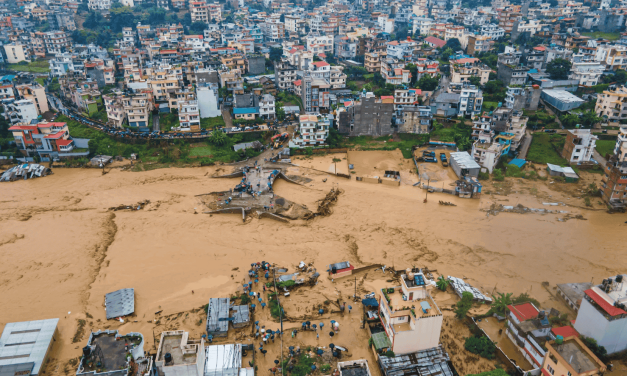
STORY CREDITS Writer: Manasasri Muralidharan Photo: IITGN Photos In the face of rising floodwaters and increasingly erratic weather, cities worldwide have turned to a seemingly straightforward solution: build a wall. From Spain to Surat, partial embankment systems or levees have become the go-to defence against riverine and coastal flooding. Often built along rivers and low-lying urban corridors, these structures are designed to hold back water during high discharge events, shielding the most economically important urban cores. But, historically, it has been observed that this protection is uneven and temporary. Floodwaters rerouted by these barriers find new paths. But in safeguarding...

Read More

Finding New Avenues to Overcome Drug Resistance in a Deadly Brain Cancer

STORY CREDITS Writer: Manasasri Muralidharan Photo: IITGN Photos Imagine a lock that changes its combination every time you try to open it. This is the common challenge faced by scientists and medical professionals while combating cancer. The deadly disease adapts to various therapies, surviving intense radiation, chemotherapy, targeted drugs, and more. This extraordinary ability of cancer cells aids them in developing resistance to various therapeutic avenues, and is especially detrimental in aggressive forms of cancer. Glioblastoma multiforme (GBM) is a prime example of an aggressive brain cancer, notorious for its resilience against treatment. At the Indian Institute of Technology Gandhinagar,...

Read More