
STORY CREDITS
Writer: Prof Atul Bhargav (reviewed by Abilash Kumar Muthuraman and Mahesh M H)
Photo: IITGN Photos
Tremendous opportunities are opening up in civilian and strategic applications in the aerospace, marine and terrestrial domains for silent, efficient, cost-effective and long-endurance propulsive power. Hydrogen fuel cell systems and their derivatives are uniquely positioned to provide solutions in these spaces.
“Our lab and startup focuses on designing and building the next generation of ultra-high efficiency hydrogen fuel cell systems that will power aerospace, marine and terrestrial mobility platforms. We are constantly pushing the boundaries on improving the energy density and power density of these systems to deliver long-endurance, low-cost and carbon-free energy solutions that are specific to each domain,” says Prof Atul Bhargav, who leads the Energy Systems Research Laboratory (ESRL) at IIT Gandhinagar.
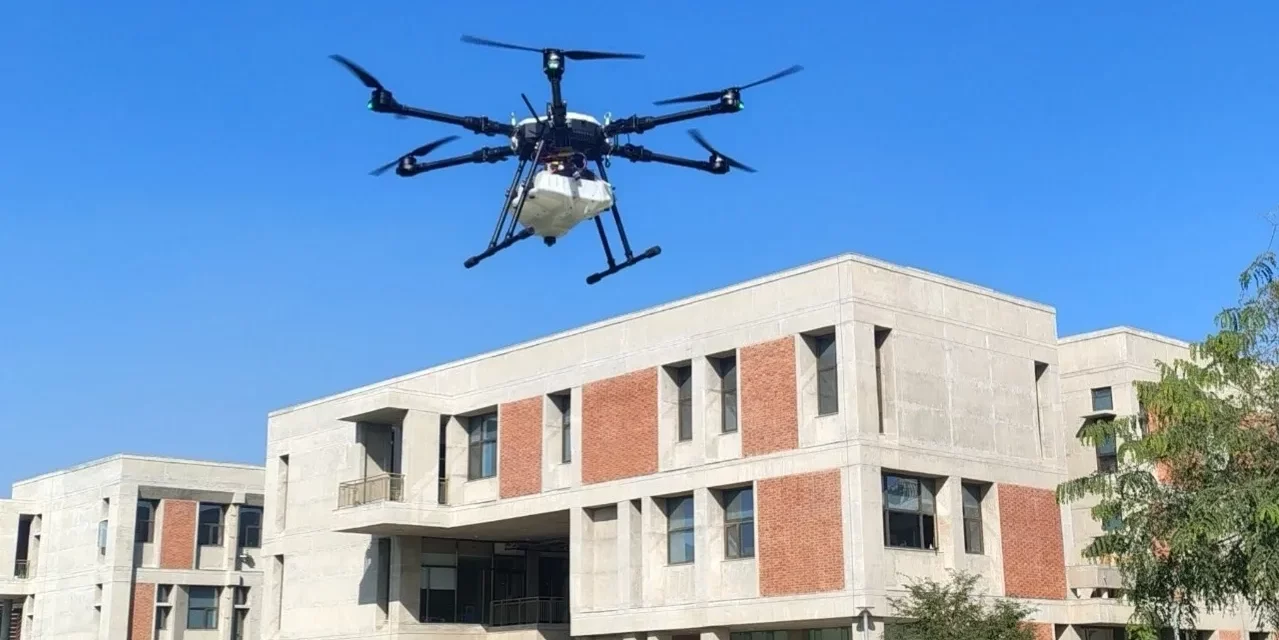
Cellegant Energy Systems, an IITGN startup founded by Prof Bhargav, which is currently incubated at the IIEC, takes these ESRL innovations to market. This collaboration has made strides in hydrogen fuel cell technology, developing power packs and safe energy carriers for Unmanned Aerial Vehicles (UAVs) and other niche applications.
In addition to compressed hydrogen, the lab and startup are developing systems that use solid, liquid or gaseous hydrogen-carriers with on-board hydrogen generation. Compact, lightweight and efficient on-board hydrogen generators can cut the weight of hydrogen carriage by half relative to compressed hydrogen storage, according to Prof Bhargav.
The laboratory facility is equipped to test hydrogen fuel cell power packs and their subsystems, such as fuel and oxidant supply, thermal management and humidity management, which are essential for the efficient functioning of fuel cells. Their recent innovations in these subsystems can drastically improve system efficiency while reducing their weight and volume, which is extremely important for aerospace and marine systems. In addition, these systems have been tested to work efficiently in different climatic conditions and temperatures, breaking ground in high-altitude UAV applications.
Furthermore, their work in special chemicals used as hydrogen carriers allows hydrogen to be carried safely in powder form in atmospheric pressure swappable cartridges. This expands the accessibility of hydrogen in remote areas where compressed hydrogen is not available, while also significantly mitigating the safety challenges with hydrogen.
Their advancements in fuel cell technology can multiply the range of UAVs and drones to hours, making them a strong contender to be used in defence and surveillance applications. The indigenous development of these technologies by ESRL and Cellegant can significantly reduce dependencies on exports in the defence and energy sectors, while being sustainable and contributing to India’s net-zero commitments.
Cellegant Energy Systems and ESRL are working on projects for the Defence Research and Development Organisation (DRDO) and have secured grants from NIDHI PRAYAS and the Government of Gujarat.