
| STORY CREDITS Writer: Corena Pereira Photo: Arijit Reeves, Priyanshu Patel |
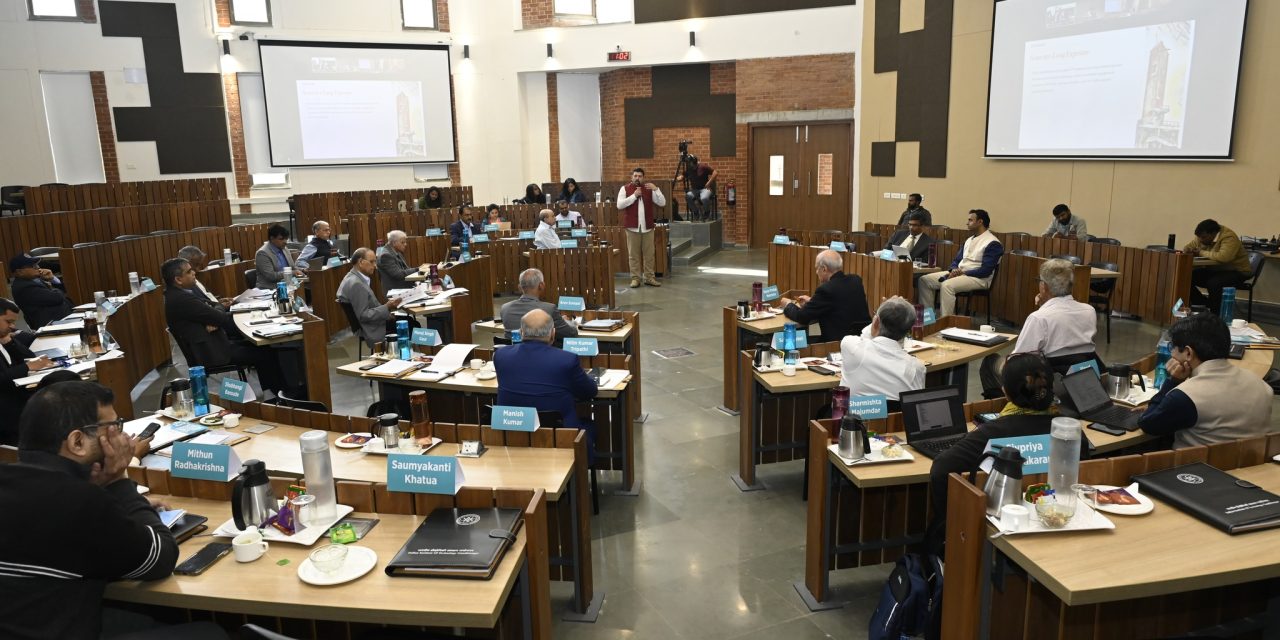
The Indian Institute of Technology Gandhinagar (IITGN) successfully hosted its 13th Academic Advisory Council (AAC) on January 9, 2026, followed by the 14th Leadership Conclave (LC) on January 10, 2026. These flagship forums brought together eminent academicians, policymakers, industry leaders, and global experts to deliberate on the Institute’s academic, research, governance, and institutional development priorities.
The 13th Academic Advisory Council commenced with welcome remarks by Prof Madhav Pathak, Assistant Professor, Electrical Engineering, IITGN, and Prof Vaibhav Tripathi, Assistant Professor, Cognitive and Brain Sciences, IITGN, followed by opening remarks by Prof Rajat Moona, Director, IIT Gandhinagar.
Addressing the Council, Prof Moona highlighted IITGN’s strong emphasis on interdisciplinary education, industry–academia collaboration, and global engagement. He underlined the Institute’s flexible academic structure that enables students to pursue courses across departmental boundaries, fostering truly multidisciplinary learning through continuous benchmarking with leading institutions.
He also outlined initiatives such as empowered course offerings, cross-departmental classrooms, modular programmes delivered by national and international experts, and collaborative teaching models involving visiting and adjunct faculty. Emphasising expanded internships and industry engagement, Prof Moona reaffirmed the Institute’s commitment to student success, optimal resource utilisation, and continuous academic evolution.
The Council’s discussions focused on Curriculum Adaptation for Emerging and Strategic Technologies, Enhancing Research Productivity, Internationalisation Roadmap, and Sustaining Growth While Preserving Institutional Culture. Deliberations explored integrating emerging domains into academic programmes, strengthening research impact, expanding global collaborations and student mobility, and preserving IITGN’s culture of openness, interdisciplinarity, and student-centricity.
The meeting brought together eminent leaders from academia and allied domains, including Prof Ashish Garg (IIT Kanpur), Prof Manoj Singh Gaur (Director, IIT Jammu), Prof Nuno Guimarães (University Institute of Lisbon, Portugal), Prof Nitin K Tripathi (Asian Institute of Technology, Thailand), and Prof Pankaj Jalote (IIIT Delhi), among others, who provided strategic external inputs.
Members emphasised strengthening industry–academia collaboration, student mobility programmes, thematic and mission-mode research, and integration of external expertise in areas such as health sciences, digital technologies, and national priority domains. Enhancing internships, startups, applied projects, and extended industry exposure was identified as critical to building leadership in select focus areas and achieving societal impact.
The Council also discussed expanding interdisciplinary academic offerings, including flexible postgraduate programmes and new initiatives in artificial intelligence, sustainability, fintech, robotics, and quantum technologies, while strengthening integration across engineering, sciences, and management.
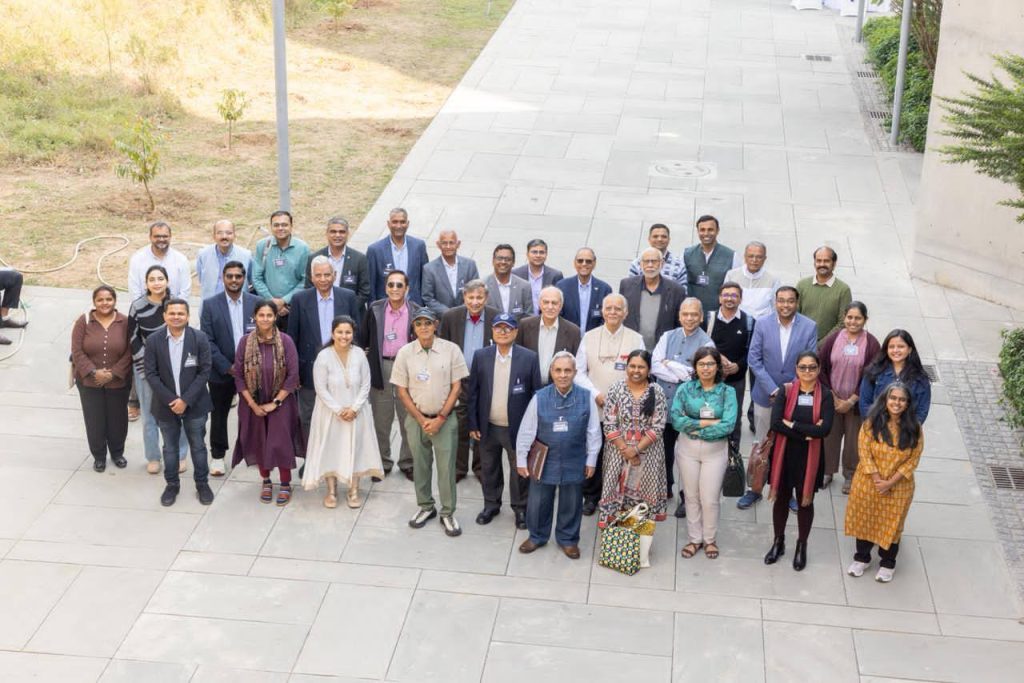
14th Leadership Conclave
On Day 2, the 14th Leadership Conclave focused on guiding the Institute’s short-, medium-, and long-term strategic priorities through discussions on institutional branding, governance frameworks, staff empowerment, and extending IIT Gandhinagar’s presence beyond the campus.
“Education today cannot remain untouched by technology. Institutions must evolve with time while staying true to the purpose for which they were established. Innovation, entrepreneurship, and industry engagement are not optional anymore—they are essential for long-term relevance and impact,” said Prof Moona while addressing the participants at the opening of the Leadership Conclave.
“Change is inevitable. Companies and institutions that do not adapt will not survive. Innovation, entrepreneurship, and industry engagement are essential for long-term relevance and impact.” he further added.
The first session on ‘Institutional Branding Strategy’ focused on shaping a clear, future-oriented identity for IIT Gandhinagar by building on strengths such as curriculum innovation, research excellence, sustainability, student-first policies, and soft-skill development.
The second session on ‘Governance Framework for Institute’ Section 8 Not-for-Profit Companies underscored the need to revisit governance norms for Section 8 companies at IITs—calling for independent boards, clear mandates, transparent resource sharing, an arm’s-length relationship with institutes, and a shift towards a more enabling, VC-like institutional mindset, to strengthen autonomy and impact for effective functioning.
The third session on ‘Staff Empowerment’ focused on fostering an inclusive and collaborative culture that promotes professional growth, shared responsibility, leadership, recognition, and institutional ownership across staff, faculty, and students.
The fourth session on ‘Extending the IIT Gandhinagar Presence Beyond Campus’ highlighted the need for structured professional teams to support faculty–industry engagement, maintain clear separation between skilling, technology transfer, and fundraising, and strengthen global presence through partnerships and extension programmes, while safeguarding academic values and faculty time.
This year’s Academic Advisory Council and Leadership Conclave concluded with actionable reflections to support IITGN’s strategic growth, reaffirming the Institute’s commitment to academic excellence, robust governance, and deeper engagement with industry, society, and the global academic community.